
Francisco Pacheco and the Arte de la Pintura: Contributions to Post-Tridentine Trinitarian Iconography in the Hispanic World
Article Sidebar
Main Article Content
Abstract
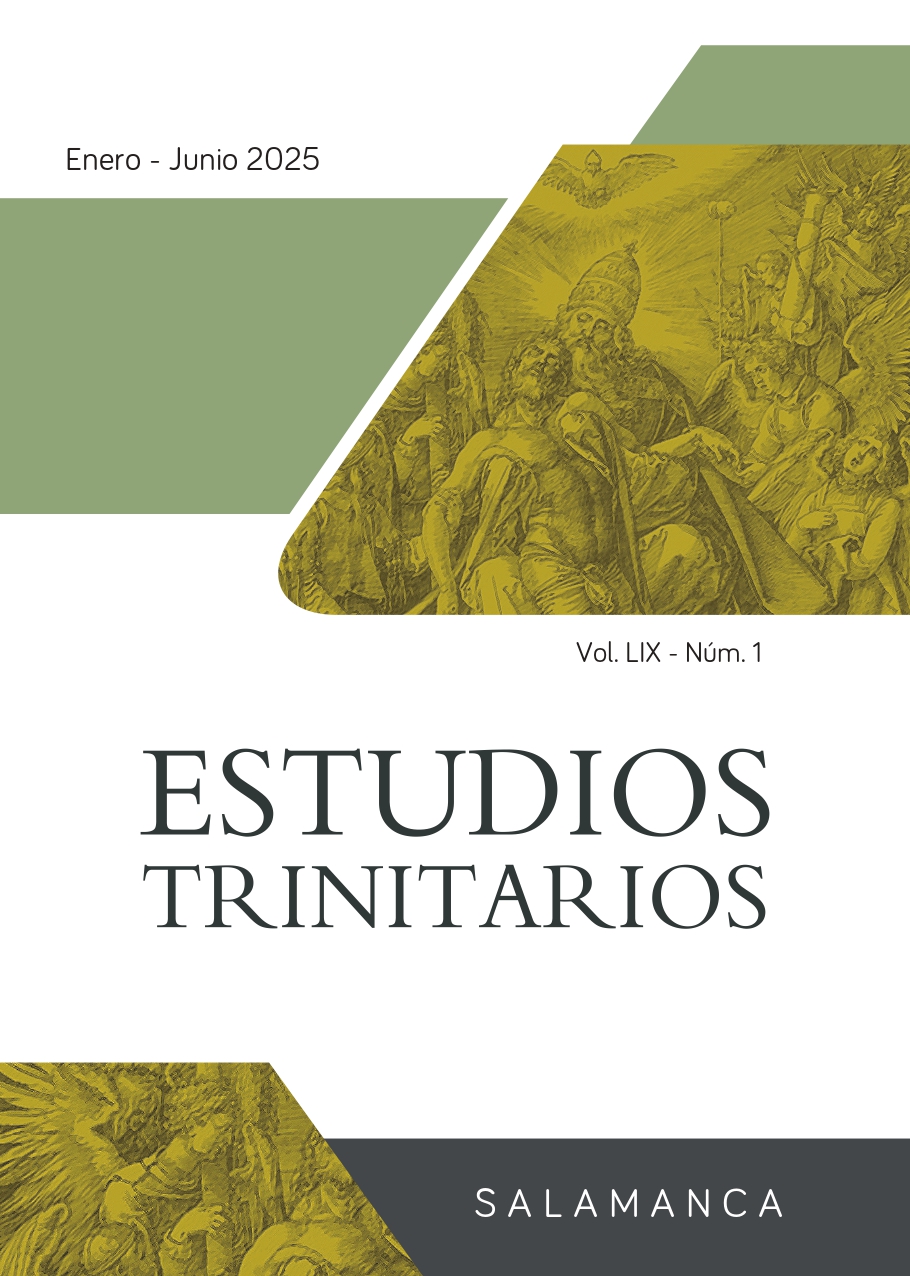
The paper provides an overview of the figure of Francisco Pacheco within the cultural context of early modern Spain, highlighting his role in shaping the artistic sensibility of the Spanish Golden Age and his function as a mediator between humanistic knowledge, workshop practice, and the regulation of sacred imagery. In particular, the article focuses on the author’s most significant work, Arte de la Pintura, examining its sources, historical context, and internal structure. The treatise emerges as a work capable of integrating post-Tridentine doctrinal concerns and of reworking, in a simplified yet operationally effective manner for its intended audience of artists, the reflections of Gabriele Paleotti and Johannes Molanus within a coherent normative framework aimed at the education and regulation of painting practice. The concluding section examines Pacheco’s prescriptions for the representation of the Holy Trinity, reconstructing the models, formal criteria, and iconographic limits he proposed to ensure both theological clarity and visual decorum, and illustrating these guidelines with images pertinent to the iconographic themes discussed, drawn from preceding, contemporary, and subsequent contexts, both European and Ibero-American.
Downloads
Global Statistics ℹ️
|
121
Views
|
56
Downloads
|
|
177
Total
|
|
Article Details

This work is licensed under a Creative Commons Attribution-NonCommercial-NoDerivatives 4.0 International License.
Previously, the journal operated under a traditional copyright regime. As of 2025, the journal is published under a Creative Commons license.
Authors who publish in Estudios Trinitarios agree to the following conditions:
- Authors retain copyright © and grant the journal the right of publication under the Creative Commons Attribution–NonCommercial–NoDerivatives 4.0 International License (CC BY-NC-ND).

- The content may be copied, used, shared, transmitted, and publicly displayed provided that:
- Give proper attribution to the author(s) and to the publication in Estudios Trinitarios, indicating the volume, issue, year, and the page numbers on which the information is found.
- No commercial use is made of the material.
- No derivative works may be created for commercial purposes without the authorization of the journal.
Authors are permitted and encouraged to disseminate their articles electronically (including full citation details: Estudios Trinitarios, volume, issue, year, pagination, ISSN, DOI, etc.) in order to enhance circulation and dissemination and to increase citation and academic impact within the scholarly community.
Information about the journal will be supplied to Dulcinea and SHERPA/Romeo.


References
Agostino. De Trinitate. CCSL 50, Typographi Brepols Editores Pontificii, Turnholti, 1968.
Amerio, E. «Da Camerino al Vicereame del Perù. Nuovi contributi allo studio del pittore gesuita Democrito Bernardo Bitti». Intrecci d’arte, n.º 12 (2023).
Angulo Íñiguez, D. Historia de la pintura española. Pintura del Siglo de Oro. Alianza, Madrid, 1978.
B. Bassegoda i Hugas, Francisco Pacheco. Teórico de la pintura y censor de imaginería, Universidad de Sevilla, Sevilla, 2011.
Bacci, M. Guido Reni e la pittura barocca a Roma. Gangemi, Roma, 2002.
Bailey, G. A. Art of Colonial Latin America. Phaidon Press, London, 2005.
Bailey, G. A. The Andean Baroque: Convergent Cultures in the Churches of Colonial Peru. Cambridge University Press, New York, 2017.
Belting, H. Il culto delle immagini. Storia dell’icona dall’età imperiale al tardo Medioevo. Carocci, Roma, 2001.
Belting, H. Likeness and Presence. University of Chicago Press, Chicago, 1994.
Boskovits, M. «Iconografia della Trinità tra Medioevo e Rinascimento». Arte Cristiana, vol. 78 (1990), pp. 215–232.
Brown, J. Painting in Spain 1500-1700. Yale University Press, New Haven-London, 1998.
Carli, G. Mariotto di Nardo e la pittura fiorentina tardogotica. Electa, Milano, 1987.
Checa Cremades, F. «Clasicismo, mentalidad religiosa e imagen artística: Las ideas estéticas de Diego de Cabrales ». Revista de Ideas Estéticas, n.º 145 (1979), pp. 51-60.
Checa Cremades, F. El arte en la España del Siglo de Oro. Cátedra, Madrid, 1999.
Cummins, T. Toast with the Inca. Andean Abstraction and Colonial Images on Quero Vessels. University of Michigan Press, Ann Arbor, 2002.
Dean, C. Inka Bodies and the Body of Christ. Duke University Press, Durham-London, 1999. DOI: https://doi.org/10.2307/j.ctv11sn2sv
Delenda, O. Zurbarán. Los conjuntos y el obrador. Fundación de Apoyo a la Historia del Arte Hispánico-Wildenstein Institute, Madrid, 2010.
Dianich, S., Verdon, T. (a cura di). La Trinità di Masaccio: arte e teologia. EDB, Bologna, 2004.
Domínguez Bardona, J. Proceso inquisitorial contra el escultor Esteban Jamete, Madrid, 1933.
Freeman, A. «The Throne of Mercy Iconography in Early Prints». Print Quarterly, n.º 27 (2010), pp. 131-150.
Gallego, J. Juan de Roelas y el naturalismo sevillano. Diputación de Sevilla, Sevilla, 1987.
Gisbert, T. y de Mesa, J. Historia de la pintura cuzqueña, vol. I. Gisbert y Cía, La Paz, 1982.
Greshake, G. Il Dio unitrino: una teologia trinitaria. Queriniana, Brescia, 2000.
Kemp, M. The Science of Art. Yale University Press, New Haven-London, 1990.
Kinkead, M. «Pacheco and the Inquisition». The Art Bulletin, vol. 66, n.º 1 (1984), pp. 57-68. DOI: https://doi.org/10.2307/3050420
Lomazzo, G. P. Trattato dell’arte della Pittura. Milano, 1584.
Marías, F. El largo siglo XVI. Los usos artísticos del Renacimiento español. Taurus, Madrid, 1989.
Marías, F. Velázquez. Pintor y criado del rey. Nerea, Madrid, 1999.
Molanus, J. «De picturis et imaginibus sacris». In F. Bœspflug, O. Christin e B. Tassel (a cura di), Traité des saintes images, Cerf, Paris, 1996, pp. 243-252.
Molanus, J. De Historia Sanctarum Imaginum et Picturarum. Lovanio, 1594.
O’Malley, J. W. The Jesuits: A History from Ignatius to the Present. Rowman & Littlefield, Lanham, 2014. DOI: https://doi.org/10.5040/9798881831301
Pacheco, F. Arte de la pintura. Ed. con introduzione e note di B. Bassegoda i Hugas. Cátedra, Madrid, 1990.
Pacheco, F. Libro de descripción de verdaderos retratos de ilustres y memorables varones. Sevilla, 1605.
Paleotti, G. «Discorso intorno alle immagini sacre e profane (1582)». In P. Barocchi (a cura di), Trattati d’arte del Cinquecento, vol. 2, Bari, 1961, pp. 117-517.
Panofsky, E. Studies in Iconology. Harper & Row, New York, 1939.
Pérez Sánchez, A. E. Pintura barroca en España (1600–1750). Cátedra, Madrid, 1992.
Portús, J. Pintura y pensamiento en la España del Siglo de Oro. Museo del Prado, Madrid, 2001.
Portús, J. Zurbarán. Tf Editores, Madrid, 2011.
Romano, G. Pittura in Lombardia tra Gotico e Rinascimento. Electa, Milano, 1985.
Rubin, M. The Christian Image and Its Critics. Cambridge University Press, Cambridge, 2014.
Salviucci Insolera, L. (a cura di). Immagini e Arte Sacra nel Concilio di Trento. «Per istruire, ricordare, meditare e trarne frutti». Artemide, Roma, 2016.
Sartor, M. «La Trinidad Heterodoxa en América Latina». Procesos: Revista Ecuatoriana de Historia, n.º 25 (2007), pp. 9-43. DOI: https://doi.org/10.29078/rp.v1i25.190
Scholz-Hänsel, K. Diego Velázquez 1599-1660. Taschen, Köln, 2006.
Sendler, E. L’icona, immagine dell'invisibile. San Paolo, Cinisello Balsamo, 2007.
Spinosa, N. Ribera. L’opera completa. Electa, Napoli, 2003.
Uspenskij, B. Teologia dell’icona. La Casa di Matriona, Milano, 1995.
Valdivieso, E. Historia de la pintura sevillana. Guadalquivir Ediciones, Sevilla, 1992.
Valdivieso, F. Francisco Pacheco (1564-1644). Caja San Fernando, Sevilla, 1990.
Vincent-Cassy, C. «La honra y acierto de la pintura. Sobre el “glorioso remate” del Arte de la pintura y las adiciones a algunas imágenes de Francisco Pacheco». Atlante, nº. 20 (2024). DOI: https://doi.org/10.4000/12v0r
Yarza Luaces, J. Arte y espiritualidad en la España medieval. Cátedra, Madrid, 2001.